最新消息
2026 Child Safety Equipment Guide|Home Safety for Kids, Childproofing Supplies & Baby Proofing Equipment by UNITEL ENTERPRISE CO., LTD.
2026 Child Safety Equipment Guide|
Home Safety for Kids, Childproofing Supplies & Baby Proofing Equipment by UNITEL ENTERPRISE CO., LTD.
Tags: Child Safety Equipment | Child Safety Products | Child Safety Solutions | Childproofing Supplies | Childproof Home Accessories | Home Safety for Kids | Baby Proofing Equipment | Childproofing | Home Safety | Baby Safety | Child Safety
As children spend more time at home, creating a safer living environment has become an increasingly important concern for parents and caregivers. For babies and young children who are learning to crawl, walk, climb, and explore, everyday household items such as furniture corners, windows, balconies, stairs, and slippery floors can become potential safety hazards.
Is your home truly safe for your child?
Many parents believe that constant supervision is enough to prevent accidents. However, effective Home Safety for Kids requires more than simply watching children. A safer home starts with identifying potential risks in advance and using appropriate Child Safety Equipment, environmental planning, and daily safety habits.
From impact protection and fall prevention to anti-slip measures, furniture stability, electrical safety, and safe storage, every detail can play an important role in reducing household risks.
UNITEL ENTERPRISE CO., LTD. specializes in Child Safety Products, Child Safety Solutions, Childproofing Supplies, and Childproof Home Accessories designed to support safer environments for children and families.
This 2026 guide introduces important childproofing considerations for different areas of the home and explains how parents can choose suitable Baby Proofing Equipment and other home safety solutions.
Table of Contents
▸ Why Is Home Safety for Kids Especially Important?
▸ Six Common Child Safety Risks at Home
▸ The "2 Don'ts and 4 Do's" Childproofing Principle
▸ How to Improve Safety in Different Areas of the Home
▸ How to Choose Child Safety Equipment
▸ Common Types of Child Safety Products
▸ 2026 Home Safety Checklist for Kids
▸ FAQ: Child Safety Equipment and Childproofing Supplies
▸ About UNITEL ENTERPRISE CO., LTD.
▸ Conclusion: A Safer Home Starts with Looking at Your Home Through Your Child's Eyes
1. Why Is Home Safety for Kids Especially Important?
Children spend a significant amount of time exploring their surroundings. As babies grow from crawling to standing and walking, their mobility and curiosity increase rapidly.
In a short period of time, a child may:
Climb onto a sofa or bed
Pull themselves up using furniture
Run through the living room
Hit sharp furniture corners
Slip on wet bathroom floors
Approach windows or balconies
Pull electrical cords
Climb chairs or cabinets
Put small objects into their mouths
For this reason, Home Safety for Kids should not rely on supervision alone. A comprehensive approach combines responsible adult supervision with practical Childproofing Supplies and a safer home environment.
2. Six Common Child Safety Risks at Home
Many household items appear harmless to adults but may present different risks to babies and young children.
1. Furniture Corners and Sharp Edges
As children learn to walk, they often hold onto furniture or move quickly through the home.
Coffee tables, cabinets, desks, shelves, and wall corners can become potential impact hazards.
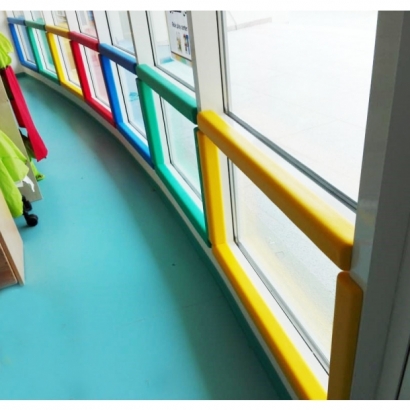
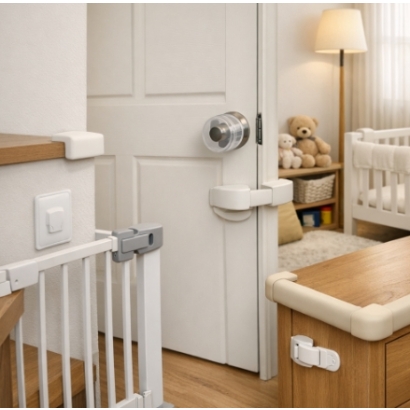
Appropriate Childproof Home Accessories, such as corner guards and edge protectors, can help reduce the risk of direct impact.
2. Windows and Balconies
Windows and balconies are among the areas that require special attention when planning Home Safety for Kids.
Parents should avoid placing chairs, storage boxes, tables, or other climbable furniture near windows or balconies.
Depending on the environment, suitable fall-prevention measures should also be considered.
3. Bathrooms and Kitchens
Bathrooms and kitchens often involve water, moisture, and slippery surfaces.
Young children are still developing their balance and coordination, making wet floors a potential slipping hazard.
Keeping floors dry and using appropriate anti-slip solutions can help improve safety.
4. Stairs
Homes with stairs require additional safety planning.
Depending on the child's age and the home's layout, safety gates and anti-slip measures may be useful Child Safety Solutions.
5. Electrical Outlets and Cords
Children naturally explore their surroundings and may touch electrical outlets or pull on loose cords.
Electrical outlet protection and proper cord organization are important parts of a childproof home.
6. Small Objects, Batteries, and Household Products
Medicines, cleaning products, button batteries, and small objects should always be stored out of children's reach.
Proper storage is an essential part of effective childproofing.
3. The "2 Don'ts and 4 Do's" Childproofing Principle
Parents who are unsure where to begin can follow this simple safety principle.
Two Things You Shouldn't Do
1. Don't allow young children to enter high-risk areas unsupervised
Bathrooms, kitchens, and stairways may require additional supervision and safety planning.
2. Don't place climbable furniture near windows or balconies
Chairs, tables, boxes, and storage furniture can become climbing tools for curious children.
Four Things You Should Do
1. Protect against impacts
Consider using edge guards and corner protection on sharp furniture corners.
2. Reduce fall risks
Evaluate windows, balconies, and elevated areas and consider suitable safety measures.
3. Improve slip resistance
Keep floors dry and consider appropriate anti-slip products where necessary.
4. Inspect regularly
Children grow quickly, and their abilities constantly change. Safety equipment should be inspected regularly to ensure it remains secure and appropriate.
4. How to Improve Safety in Different Areas of the Home
Different areas of the home have different safety concerns.
AreaCommon RisksPossible Child Safety Solutions
Living RoomImpact, fallsCorner guards, edge protection, protective mats
Children's RoomFurniture impact, tippingFurniture stabilization and corner protection
BedroomFalling and impactBedside protection and furniture safety measures
BathroomWet and slippery floorsAnti-slip mats and dry floor management
KitchenBurns, unsafe accessSafety locks and secure storage
WindowsFall hazardsAppropriate fall-prevention measures
BalconyElevated areasSafety planning and removal of climbable objects
StairsFallingSafety gates and anti-slip measures
Living Room: A Major Activity Area
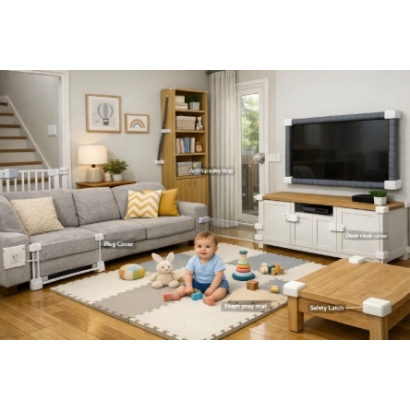
The living room is often where children crawl, play, walk, and run.
Parents can try viewing the room from a child's height. This simple approach may reveal hazards that adults normally overlook, such as sharp table corners, accessible electrical outlets, or small objects on the floor.
Bathroom: Focus on Slip Prevention
Bathrooms can become slippery when wet.
Keeping the floor dry and using suitable Child Safety Products can help improve the safety of the environment.
Windows and Balconies: Prevent Access to Dangerous Heights
In addition to appropriate safety measures, parents should remove chairs, tables, storage boxes, and other objects that children may use for climbing.
5. How to Choose Child Safety Equipment
Choosing Child Safety Equipment is not simply about selecting the largest or thickest product.
Parents should consider the child's age, activity level, installation location, and overall home environment.
Corner and Edge Protection
Suitable areas may include:
Table corners
Cabinet corners
Wall edges
Door frames
Furniture edges
Stairway corners
Important considerations include:
Cushioning performance
Material quality
Installation method
Durability
Secure attachment
Protective Floor Mats
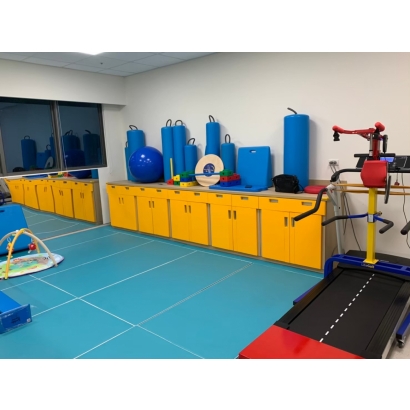
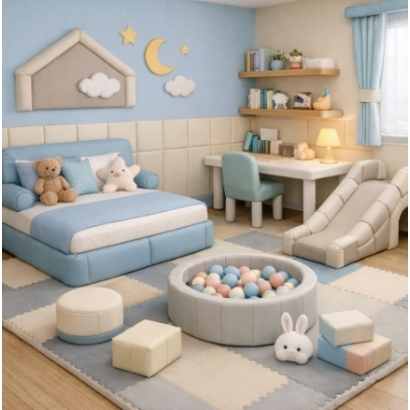
Protective mats may be suitable for children's play areas, living rooms, and other active spaces.
When selecting a mat, consider:
Cushioning performance
Slip resistance
Material quality
Durability
Ease of cleaning
Installation and connection stability
Fall-Prevention Equipment
Windows and balconies should be evaluated according to the actual building environment and household needs.
Especially in elevated residential buildings, children should never be allowed to access potentially dangerous heights without appropriate supervision and safety planning.
6. Common Types of Child Safety Products
A complete childproofing plan may involve several types of Child Safety Products.
Safety CategoryCommon ProductsMain Purpose
Impact ProtectionCorner guards, edge protectorsHelp reduce impact risks
Protective CushioningProtective mats, cushioning matsProvide additional surface protection
Slip PreventionAnti-slip matsHelp reduce slipping risks
Fall PreventionWindow safety equipmentHelp reduce access to dangerous heights
Furniture StabilityFurniture securing devicesHelp reduce tipping risks
Contact PreventionSafety locks and outlet protectionHelp reduce unintended access
UNITEL ENTERPRISE CO., LTD. provides Child Safety Solutions and childproofing-related products designed to support safer home environments.
These may include:
Child safety protection products
Corner guards
Edge protection
Protective mats
Anti-slip products
Childproofing accessories
Home safety planning solutions
However, no safety product can completely replace responsible supervision. All Baby Proofing Equipment and childproofing products should be installed correctly and inspected regularly.
7. 2026 Home Safety Checklist for Kids
Parents can use the following checklist to review their home environment.
Safety CheckCompleted
Are sharp furniture corners protected?□
Are windows evaluated for child safety?□
Have climbable objects been removed from balconies and windows?□
Are bathroom floors managed to reduce slipping risks?□
Are stairs appropriately protected?□
Are electrical outlets protected where necessary?□
Are electrical cords properly organized?□
Are medicines stored out of children's reach?□
Are batteries and small objects safely stored?□
Is furniture stable and properly secured?□
Are corner guards and protective mats securely installed?□
Is child safety equipment inspected regularly?□
If several items remain unchecked, there may still be opportunities to improve your home's childproofing strategy.
FAQ: Child Safety Equipment and Childproofing Supplies
Q1: Why is Home Safety for Kids important?Children are constantly developing new abilities. As they learn to crawl, walk, climb, and explore, they may encounter household hazards that adults do not immediately recognize.A combination of supervision, environmental planning, and appropriate Child Safety Equipment can help reduce unnecessary risks.
Q2: Where should corner guards be installed?Parents can begin by checking areas within a child's normal activity zone, including coffee tables, desks, cabinets, shelves, and other sharp furniture edges.The appropriate installation location depends on the home's layout and the child's activities.
Q3: Are Childproof Home Accessories necessary for windows?Windows should be carefully evaluated as part of a complete Home Safety for Kids plan.Parents should avoid placing climbable furniture nearby and consider suitable safety measures according to the actual environment.
Q4: What are protective floor mats used for?Protective mats can provide cushioning and may offer additional surface protection in children's activity areas.However, they cannot guarantee the prevention of all injuries and should be combined with proper supervision and environmental management.
Q5: Is thicker Child Safety Equipment always better?Not necessarily.When selecting Child Safety Products, parents should consider material quality, cushioning performance, slip resistance, durability, installation method, and the actual environment.
Q6: Does Baby Proofing Equipment need regular inspection?Yes.Children's height, strength, and mobility change quickly. Safety products may also loosen or wear over time.Regular inspection is an important part of maintaining effective childproofing.
Q7: What is the most important part of childproofing a home?There is no single product that can eliminate every household risk.A more complete strategy includes:
Impact protection
Fall prevention
Slip prevention
Furniture stabilization
Electrical safety
Safe storage
Regular inspection
Responsible adult supervision
Combining these elements creates more effective Child Safety Solutions for the home.
About UNITEL ENTERPRISE CO., LTD.
UNITEL ENTERPRISE CO., LTD. specializes in Child Safety Products, Child Safety Equipment, Childproofing Supplies, Childproof Home Accessories, and Home Safety Solutions for Kids.
The company focuses on helping families and businesses create safer environments through practical childproofing products and safety planning.
Main Product and Service Categories:
Child Safety Equipment
Child Safety Products
Child Safety Solutions
Childproofing Supplies
Childproof Home Accessories
Protective Corner Guards
Edge Protection
Protective Floor Mats
Anti-Slip Products
Baby Proofing Equipment
Home Safety for Kids Solutions
Company Name: UNITEL ENTERPRISE CO., LTD.
Phone: +886-3-3166782 / +886-3-3171576
Address: No. 95, Lane 118, Dongjiu Street, Guishan District, Taoyuan City, Taiwan
Official Website: https://www.corner-guard.com.tw
Conclusion: A Safer Home Starts with Looking at Your Home Through Your Child's Eyes
Creating a safer home for children is not simply about purchasing a few products.
A sharp furniture corner, a wet bathroom floor, an accessible window, or a small battery left within reach may all become potential hazards for a curious child.
That is why effective Home Safety for Kids requires a complete approach.
Starting with Child Safety Equipment, impact protection, fall prevention, anti-slip measures, furniture stability, electrical safety, and proper storage can help families create a safer environment for children to grow and explore.
UNITEL ENTERPRISE CO., LTD. encourages parents and caregivers to take another look at their homes from a child's perspective.
By combining appropriate Childproofing Supplies, Childproof Home Accessories, Child Safety Products, and Baby Proofing Equipment with regular inspections and responsible supervision, families can take meaningful steps toward improving everyday home safety.
When it comes to child safety, small improvements can make a meaningful difference.
2026 Child Safety Equipment Guide|
Home Safety for Kids, Childproofing Supplies & Baby Proofing Equipment by UNITEL ENTERPRISE CO., LTD.
Tags: Child Safety Equipment | Child Safety Products | Child Safety Solutions | Childproofing Supplies | Childproof Home Accessories | Home Safety for Kids | Baby Proofing Equipment | Childproofing | Home Safety | Baby Safety | Child Safety
As children spend more time at home, creating a safer living environment has become an increasingly important concern for parents and caregivers. For babies and young children who are learning to crawl, walk, climb, and explore, everyday household items such as furniture corners, windows, balconies, stairs, and slippery floors can become potential safety hazards.
Is your home truly safe for your child?
Many parents believe that constant supervision is enough to prevent accidents. However, effective Home Safety for Kids requires more than simply watching children. A safer home starts with identifying potential risks in advance and using appropriate Child Safety Equipment, environmental planning, and daily safety habits.
From impact protection and fall prevention to anti-slip measures, furniture stability, electrical safety, and safe storage, every detail can play an important role in reducing household risks.
UNITEL ENTERPRISE CO., LTD. specializes in Child Safety Products, Child Safety Solutions, Childproofing Supplies, and Childproof Home Accessories designed to support safer environments for children and families.
This 2026 guide introduces important childproofing considerations for different areas of the home and explains how parents can choose suitable Baby Proofing Equipment and other home safety solutions.
Table of Contents
▸ Why Is Home Safety for Kids Especially Important?
▸ Six Common Child Safety Risks at Home
▸ The "2 Don'ts and 4 Do's" Childproofing Principle
▸ How to Improve Safety in Different Areas of the Home
▸ How to Choose Child Safety Equipment
▸ Common Types of Child Safety Products
▸ 2026 Home Safety Checklist for Kids
▸ FAQ: Child Safety Equipment and Childproofing Supplies
▸ About UNITEL ENTERPRISE CO., LTD.
▸ Conclusion: A Safer Home Starts with Looking at Your Home Through Your Child's Eyes
1. Why Is Home Safety for Kids Especially Important?
Children spend a significant amount of time exploring their surroundings. As babies grow from crawling to standing and walking, their mobility and curiosity increase rapidly.
In a short period of time, a child may:
Climb onto a sofa or bed
Pull themselves up using furniture
Run through the living room
Hit sharp furniture corners
Slip on wet bathroom floors
Approach windows or balconies
Pull electrical cords
Climb chairs or cabinets
Put small objects into their mouths
For this reason, Home Safety for Kids should not rely on supervision alone. A comprehensive approach combines responsible adult supervision with practical Childproofing Supplies and a safer home environment.
2. Six Common Child Safety Risks at Home
Many household items appear harmless to adults but may present different risks to babies and young children.
1. Furniture Corners and Sharp Edges
As children learn to walk, they often hold onto furniture or move quickly through the home.
Coffee tables, cabinets, desks, shelves, and wall corners can become potential impact hazards.
Appropriate Childproof Home Accessories, such as corner guards and edge protectors, can help reduce the risk of direct impact.
2. Windows and Balconies
Windows and balconies are among the areas that require special attention when planning Home Safety for Kids.
Parents should avoid placing chairs, storage boxes, tables, or other climbable furniture near windows or balconies.
Depending on the environment, suitable fall-prevention measures should also be considered.
3. Bathrooms and Kitchens
Bathrooms and kitchens often involve water, moisture, and slippery surfaces.
Young children are still developing their balance and coordination, making wet floors a potential slipping hazard.
Keeping floors dry and using appropriate anti-slip solutions can help improve safety.
4. Stairs
Homes with stairs require additional safety planning.
Depending on the child's age and the home's layout, safety gates and anti-slip measures may be useful Child Safety Solutions.
5. Electrical Outlets and Cords
Children naturally explore their surroundings and may touch electrical outlets or pull on loose cords.
Electrical outlet protection and proper cord organization are important parts of a childproof home.
6. Small Objects, Batteries, and Household Products
Medicines, cleaning products, button batteries, and small objects should always be stored out of children's reach.
Proper storage is an essential part of effective childproofing.
3. The "2 Don'ts and 4 Do's" Childproofing Principle
Parents who are unsure where to begin can follow this simple safety principle.
Two Things You Shouldn't Do
1. Don't allow young children to enter high-risk areas unsupervised
Bathrooms, kitchens, and stairways may require additional supervision and safety planning.
2. Don't place climbable furniture near windows or balconies
Chairs, tables, boxes, and storage furniture can become climbing tools for curious children.
Four Things You Should Do
1. Protect against impacts
Consider using edge guards and corner protection on sharp furniture corners.
2. Reduce fall risks
Evaluate windows, balconies, and elevated areas and consider suitable safety measures.
3. Improve slip resistance
Keep floors dry and consider appropriate anti-slip products where necessary.
4. Inspect regularly
Children grow quickly, and their abilities constantly change. Safety equipment should be inspected regularly to ensure it remains secure and appropriate.
4. How to Improve Safety in Different Areas of the Home
Different areas of the home have different safety concerns.
AreaCommon RisksPossible Child Safety Solutions
Living RoomImpact, fallsCorner guards, edge protection, protective mats
Children's RoomFurniture impact, tippingFurniture stabilization and corner protection
BedroomFalling and impactBedside protection and furniture safety measures
BathroomWet and slippery floorsAnti-slip mats and dry floor management
KitchenBurns, unsafe accessSafety locks and secure storage
WindowsFall hazardsAppropriate fall-prevention measures
BalconyElevated areasSafety planning and removal of climbable objects
StairsFallingSafety gates and anti-slip measures
Living Room: A Major Activity Area
The living room is often where children crawl, play, walk, and run.
Parents can try viewing the room from a child's height. This simple approach may reveal hazards that adults normally overlook, such as sharp table corners, accessible electrical outlets, or small objects on the floor.
Bathroom: Focus on Slip Prevention
Bathrooms can become slippery when wet.
Keeping the floor dry and using suitable Child Safety Products can help improve the safety of the environment.
Windows and Balconies: Prevent Access to Dangerous Heights
In addition to appropriate safety measures, parents should remove chairs, tables, storage boxes, and other objects that children may use for climbing.
5. How to Choose Child Safety Equipment
Choosing Child Safety Equipment is not simply about selecting the largest or thickest product.
Parents should consider the child's age, activity level, installation location, and overall home environment.
Corner and Edge Protection
Suitable areas may include:
Table corners
Cabinet corners
Wall edges
Door frames
Furniture edges
Stairway corners
Important considerations include:
Cushioning performance
Material quality
Installation method
Durability
Secure attachment
Protective Floor Mats
Protective mats may be suitable for children's play areas, living rooms, and other active spaces.
When selecting a mat, consider:
Cushioning performance
Slip resistance
Material quality
Durability
Ease of cleaning
Installation and connection stability
Fall-Prevention Equipment
Windows and balconies should be evaluated according to the actual building environment and household needs.
Especially in elevated residential buildings, children should never be allowed to access potentially dangerous heights without appropriate supervision and safety planning.
6. Common Types of Child Safety Products
A complete childproofing plan may involve several types of Child Safety Products.
Safety CategoryCommon ProductsMain Purpose
Impact ProtectionCorner guards, edge protectorsHelp reduce impact risks
Protective CushioningProtective mats, cushioning matsProvide additional surface protection
Slip PreventionAnti-slip matsHelp reduce slipping risks
Fall PreventionWindow safety equipmentHelp reduce access to dangerous heights
Furniture StabilityFurniture securing devicesHelp reduce tipping risks
Contact PreventionSafety locks and outlet protectionHelp reduce unintended access
UNITEL ENTERPRISE CO., LTD. provides Child Safety Solutions and childproofing-related products designed to support safer home environments.
These may include:
Child safety protection products
Corner guards
Edge protection
Protective mats
Anti-slip products
Childproofing accessories
Home safety planning solutions
However, no safety product can completely replace responsible supervision. All Baby Proofing Equipment and childproofing products should be installed correctly and inspected regularly.
7. 2026 Home Safety Checklist for Kids
Parents can use the following checklist to review their home environment.
Safety CheckCompleted
Are sharp furniture corners protected?□
Are windows evaluated for child safety?□
Have climbable objects been removed from balconies and windows?□
Are bathroom floors managed to reduce slipping risks?□
Are stairs appropriately protected?□
Are electrical outlets protected where necessary?□
Are electrical cords properly organized?□
Are medicines stored out of children's reach?□
Are batteries and small objects safely stored?□
Is furniture stable and properly secured?□
Are corner guards and protective mats securely installed?□
Is child safety equipment inspected regularly?□
If several items remain unchecked, there may still be opportunities to improve your home's childproofing strategy.
FAQ: Child Safety Equipment and Childproofing Supplies
Q1: Why is Home Safety for Kids important?Children are constantly developing new abilities. As they learn to crawl, walk, climb, and explore, they may encounter household hazards that adults do not immediately recognize.A combination of supervision, environmental planning, and appropriate Child Safety Equipment can help reduce unnecessary risks.
Q2: Where should corner guards be installed?Parents can begin by checking areas within a child's normal activity zone, including coffee tables, desks, cabinets, shelves, and other sharp furniture edges.The appropriate installation location depends on the home's layout and the child's activities.
Q3: Are Childproof Home Accessories necessary for windows?Windows should be carefully evaluated as part of a complete Home Safety for Kids plan.Parents should avoid placing climbable furniture nearby and consider suitable safety measures according to the actual environment.
Q4: What are protective floor mats used for?Protective mats can provide cushioning and may offer additional surface protection in children's activity areas.However, they cannot guarantee the prevention of all injuries and should be combined with proper supervision and environmental management.
Q5: Is thicker Child Safety Equipment always better?Not necessarily.When selecting Child Safety Products, parents should consider material quality, cushioning performance, slip resistance, durability, installation method, and the actual environment.
Q6: Does Baby Proofing Equipment need regular inspection?Yes.Children's height, strength, and mobility change quickly. Safety products may also loosen or wear over time.Regular inspection is an important part of maintaining effective childproofing.
Q7: What is the most important part of childproofing a home?There is no single product that can eliminate every household risk.A more complete strategy includes:
Impact protection
Fall prevention
Slip prevention
Furniture stabilization
Electrical safety
Safe storage
Regular inspection
Responsible adult supervision
Combining these elements creates more effective Child Safety Solutions for the home.
About UNITEL ENTERPRISE CO., LTD.
UNITEL ENTERPRISE CO., LTD. specializes in Child Safety Products, Child Safety Equipment, Childproofing Supplies, Childproof Home Accessories, and Home Safety Solutions for Kids.
The company focuses on helping families and businesses create safer environments through practical childproofing products and safety planning.
Main Product and Service Categories:
Child Safety Equipment
Child Safety Products
Child Safety Solutions
Childproofing Supplies
Childproof Home Accessories
Protective Corner Guards
Edge Protection
Protective Floor Mats
Anti-Slip Products
Baby Proofing Equipment
Home Safety for Kids Solutions
Company Name: UNITEL ENTERPRISE CO., LTD.
Phone: +886-3-3166782 / +886-3-3171576
Address: No. 95, Lane 118, Dongjiu Street, Guishan District, Taoyuan City, Taiwan
Official Website: https://www.corner-guard.com.tw
Conclusion: A Safer Home Starts with Looking at Your Home Through Your Child's Eyes
Creating a safer home for children is not simply about purchasing a few products.
A sharp furniture corner, a wet bathroom floor, an accessible window, or a small battery left within reach may all become potential hazards for a curious child.
That is why effective Home Safety for Kids requires a complete approach.
Starting with Child Safety Equipment, impact protection, fall prevention, anti-slip measures, furniture stability, electrical safety, and proper storage can help families create a safer environment for children to grow and explore.
UNITEL ENTERPRISE CO., LTD. encourages parents and caregivers to take another look at their homes from a child's perspective.
By combining appropriate Childproofing Supplies, Childproof Home Accessories, Child Safety Products, and Baby Proofing Equipment with regular inspections and responsible supervision, families can take meaningful steps toward improving everyday home safety.
When it comes to child safety, small improvements can make a meaningful difference.